Post-Winter Car Inspection
Why You Should Schedule a Post-Winter Car Inspection in New Hampshire:
Protecting Against Rust, Tires, Brakes, and Suspensions Damage
As the snow finally melts and the roads start to clear in New Hampshire, many drivers breathe a sigh of relief. The Granite State's winters are notoriously brutal—think heavy snowfall, icy conditions, and the relentless use of road salt to keep highways passable. But while you're swapping out your snow tires for all-seasons, there's one crucial step you shouldn't skip: a thorough car inspection.
Even though New Hampshire has suspended its mandatory vehicle inspection program as of early 2026, that doesn't mean your car emerged unscathed from the season's abuse.
Safety remains your responsibility, and law enforcement can still pull you over for issues like bald tires or faulty brakes. In this post, I'll dive deep into why a post-winter check is essential, focusing on four key areas: rust, tires, brakes, and suspensions. We'll explore how New Hampshire's unique winter conditions exacerbate wear and tear, share real-world examples, and offer practical tips to keep your vehicle roadworthy. By the end, you'll understand why proactive maintenance isn't just smart—it's potentially life-saving.
New Hampshire's winters are no joke. The state averages over 60 inches of snowfall annually in many areas, with temperatures dipping well below freezing for months on end. To combat ice, the New Hampshire Department of Transportation spreads millions of pounds of salt each year, which, while effective for traction, wreaks havoc on vehicles. Potholes form as freeze-thaw cycles crack pavement, and slushy roads hide hazards that can jolt your car's undercarriage. According to automotive experts, these conditions accelerate degradation in ways that warmer climates simply don't experience. And with the recent suspension of state inspections, there's no longer a built-in reminder to check your car—making voluntary inspections even more critical. Mechanics across the state, like those at Gurney's Automotive, report seeing increased issues post-winter, from corroded frames to worn-out components, emphasizing that skipping checks could lead to accidents or costly repairs down the line.
The Silent Killer: Rust and Corrosion
Rust is perhaps the most insidious threat to vehicles in New Hampshire after winter. Road salt, a mixture of sodium chloride and sometimes magnesium chloride, acts like a catalyst for oxidation. When salt mixes with water from melting snow, it creates a corrosive electrolyte that attacks metal surfaces. This isn't just surface-level; it can penetrate deep into your car's frame, exhaust system, and underbody, weakening structural integrity over time.
Consider this: in states like New Hampshire, where salt usage is high, vehicles can develop rust holes in brake lines or fuel lines within just a few years if not protected. A rusted frame might not show obvious signs from the driver's seat, but it compromises the car's ability to absorb impacts in a crash. Mechanics often cite examples where rust has led to failed inspections in the past—think rocker panels eaten away or subframes so corroded they're deemed unsafe. One Windham resident shared a story of her SUV failing due to severe rust on the rocker panel, forcing her to replace major parts or scrap the vehicle altogether.
Why inspect after winter specifically?
The salt residue lingers on roads well into spring, and moisture from April showers can exacerbate ongoing corrosion. A professional inspection involves lifting the car to examine the undercarriage, checking for flaking rust, perforations, or weakened welds. They might use tools like borescopes to peer into hidden areas. If caught early, rust can be treated with inhibitors or undercoating sprays, potentially saving you thousands. For instance, applying a rust-proofing treatment annually can extend your vehicle's life by 5-10 years in salty environments.
Tips for DIY checks: While not a substitute for a pro, you can crawl under your car (safely jacked up) and look for orange-brown flakes or soft spots on metal. Wash your car frequently in winter, especially the underbody, to rinse off salt. And if you notice unusual vibrations or noises, get it checked immediately—rust could be affecting critical components like mounts or lines.
In summary, rust isn't just cosmetic; it's a structural hazard. With no mandatory inspections forcing the issue, scheduling one voluntarily ensures your car doesn't become a statistic in New Hampshire's rust belt.
Tires: The First Line of Defense Against Slippery Roads
Tires take a beating in New Hampshire winters, and post-season inspection is vital to assess the damage. Snow, ice, and potholes wear down tread faster than normal driving, reducing grip and increasing hydroplaning risks as spring rains arrive.
New Hampshire's roads are dotted with potholes after freeze-thaw cycles, and hitting one at speed can cause sidewall bulges, bent rims, or uneven wear. Winter tires, while great for snow, often have softer compounds that degrade quicker on dry pavement if left on too long. All-season tires, meanwhile, might have compacted snow in the treads, leading to imbalances. State police emphasize that even without inspections, you can be cited for bald tires—defined as tread depth below 2/32 of an inch.
During an inspection, mechanics measure tread depth with a gauge, check for cracks, dry rot, or embedded debris, and ensure proper inflation and alignment. Misaligned tires from pothole impacts can cause uneven wear, reducing fuel efficiency and handling. For example, if your alignment is off by just a degree, it can shave thousands of miles off tire life.
Real-world impact: In one Reddit thread from New Hampshire drivers, users discussed how winter potholes led to premature tire replacements, with some reporting blowouts on highways. An inspection might reveal that your tires need rotation, balancing, or full replacement before summer road trips.
Pro tips: Rotate tires every 5,000-8,000 miles, and switch to summers promptly after winter. Use a penny test for tread— if Lincoln's head is visible, it's time for new ones. Investing in quality all-weathers suited for New England can pay off in longevity.
Neglecting tires post-winter isn't just risky; it's illegal if they compromise safety. A quick inspection can prevent flats, skids, and fines.
Brakes: Ensuring Stopping Power After Salty Assaults
Brakes are non-negotiable for safety, yet winter conditions in New Hampshire accelerate their wear dramatically. Salt corrosion attacks brake lines, calipers, and rotors, while grit from sanded roads grinds down pads. Potholes can also misalign components, leading to uneven braking or vibrations.
Corroded brake lines are a common failure point—rust weakens the metal, potentially causing leaks and loss of hydraulic pressure. Imagine slamming on the brakes on a wet spring road only to find they don't respond fully. Mechanics report seeing rusted rotors that score pads prematurely, reducing stopping distance by up to 20% in emergencies.
An inspection includes visual checks of pads (should have at least 1/4 inch thickness), rotors for warping or rust pits, and fluid levels. They'll test for pedal feel and listen for squeals or grinding. If your ABS light flickers or brakes feel spongy, that's a red flag.
Examples abound: Auto shops like Wilson Tire & Auto describe "crazy" discoveries during checks, like failing brake lines hidden under rust. With the end of mandatory inspections, drivers must be vigilant—state laws still require functional brakes, and officers can inspect during stops.
Maintenance advice: Flush brake fluid every two years to remove moisture that promotes rust. Avoid riding brakes on icy hills to prevent overheating. Upgrading to ceramic pads can resist corrosion better in salty climes.
Bottom line: Post-winter brake inspections catch issues before they cause accidents, keeping you and others safe on New Hampshire's winding roads.
Suspensions: Absorbing the Shock of Potholes and Rust
Finally, suspensions bear the brunt of New Hampshire's rough winters. Comprising shocks, struts, springs, and control arms, this system absorbs bumps and maintains stability. Potholes jar components, while salt rusts bushings and joints, leading to clunks, pulls, or uneven tire wear.
Rusted suspensions are particularly dangerous—corrosion weakens arms and mounts, potentially causing collapse under stress. In severe cases, it leads to loss of control, especially on curves or during evasive maneuvers. Experts note that winter temperature swings weaken rubber bushings, compounding rust issues.
During inspection, mechanics bounce-test for weak shocks, check for leaks or rust, and inspect ball joints for play. Ignored damage can misalign wheels, accelerate tire wear, and strain other systems.
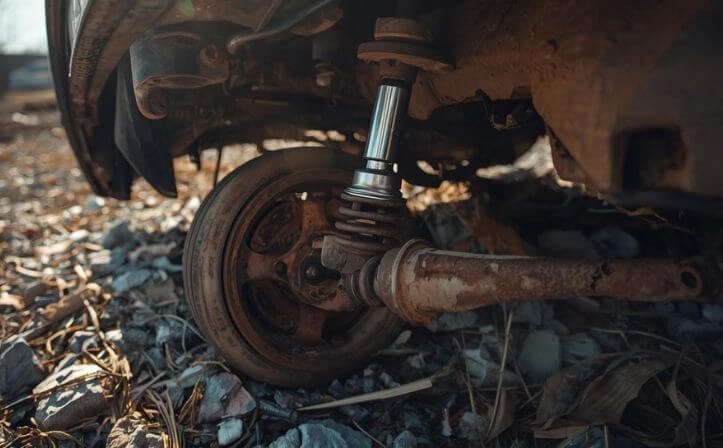
To illustrate the severity, here are some visual examples of rusty damaged suspensions:
These images show how rust can flake away metal, exposing vulnerabilities that compromise handling. In New Hampshire, where roads like Route 93 are pothole-prone, such damage is common. One mechanic shared failing trucks for rusted suspensions during past inspections.
Tips: Listen for rattles over bumps; if your car sways excessively, inspect ASAP. Regular alignments and shock replacements every 50,000 miles help.
Wrapping It Up: Safety First in the Granite State
In conclusion, while New Hampshire's vehicle inspection program is suspended, the need for post-winter checks on rust, tires, brakes, and suspensions has never been greater. Harsh winters accelerate wear, and ignoring it risks breakdowns, accidents, or citations. A $40-50 voluntary inspection at a local shop can uncover hidden dangers, extend your car's life, and provide peace of mind. Don't wait for a problem—schedule one today. Your safety, and that of your fellow drivers, depends on it. Stay safe out there!